


 Danish Wadhwa
 Dr. Varun Bajaj, MD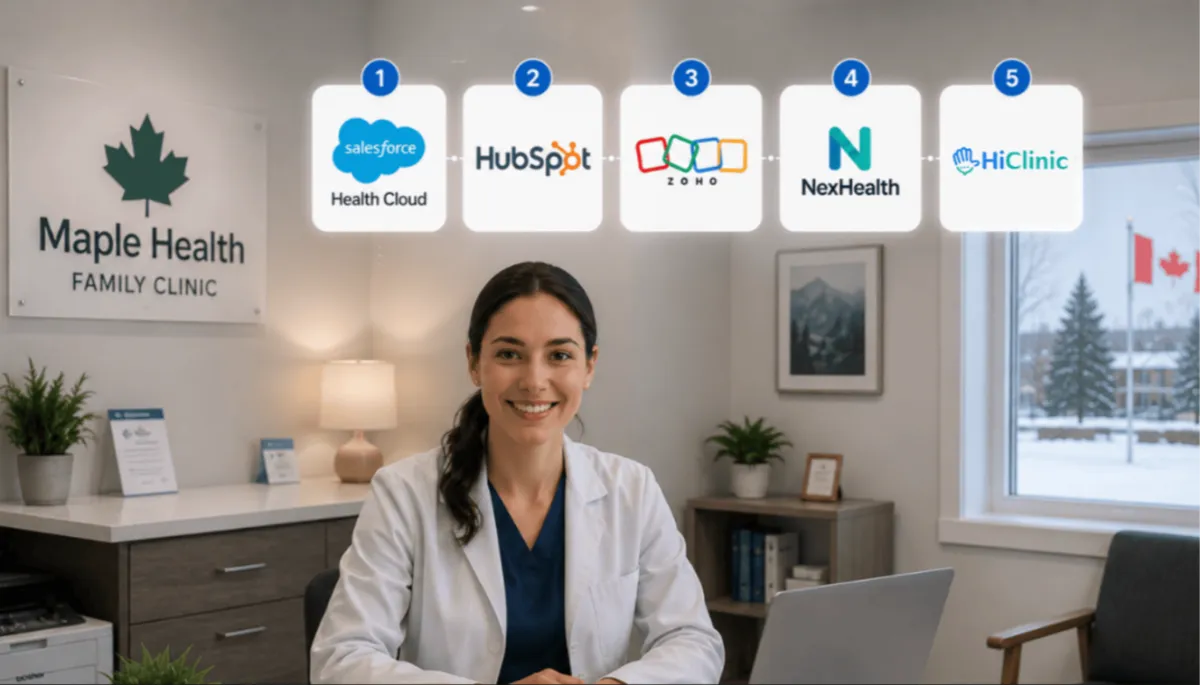
- Most clinics don’t lose patients because of poor treatment — they lose them because communication breaks down after the first interaction.
- Missed calls go unanswered, follow-ups are delayed, appointments are forgotten, and patients who should return simply disappear.
- The right patient CRM software improves communication, automates repetitive tasks, and creates better patient experiences.
- Global platforms include Salesforce Health Cloud, HubSpot, Zoho, NexHealth, and HiClinic.
- Canadian-specific platforms include Jane App, Accuro EMR, Cliniko, and Noterro.
What is patient CRM software?
Patient CRM software helps clinics manage relationships with patients from their first inquiry to repeat visits. Unlike traditional CRM systems built for sales teams, healthcare-focused platforms are designed to improve patient communication and operational efficiency.
These systems often help clinics manage:
- Appointment scheduling
- Patient communication
- Follow-ups
- Reminders
- Patient retention
- Lead tracking
- Online bookings
Clinics across Canada are investing in healthcare CRM platforms to improve communication, retention, and operational workflows, and modern platforms help automate scheduling, communication, and patient management workflows.
Why are clinics investing in better CRM tools?
Patient expectations have changed. People want fast replies, easy scheduling, and smoother communication — they don’t want to wait days for a callback or deal with confusing booking systems.
At the same time, clinic teams are managing higher patient volumes, staffing shortages, rising operational costs, and increased competition. That’s why many clinics are moving away from outdated systems and investing in smarter tools that help them scale without overwhelming staff.
What are the top patient CRM platforms overall?
Salesforce Health Cloud — best for large healthcare organizations. Built for large healthcare systems that need advanced patient relationship management, offering patient tracking, automation workflows, advanced reporting, and integrations with larger healthcare systems. Best for hospitals and large healthcare networks, though it is expensive and often too complex for smaller clinics.
HubSpot — best for patient acquisition. Works well for clinics focused on lead generation and marketing, helping manage inquiries from websites, paid ads, landing pages, and email campaigns. Best for clinics focused heavily on new patient growth, though its healthcare-specific workflows are limited.
Zoho — best for customization. Gives clinics flexibility to build custom workflows and is often chosen by smaller clinics looking for affordable customization, though it requires setup time.
NexHealth — best for scheduling and patient communication. Focuses on making scheduling easier while improving patient communication, with online booking, reminders, digital forms, and communication tools. Best for clinics focused on scheduling efficiency, though it may not solve broader retention challenges.
HiClinic — best for patient communication automation and retention. HiClinic stands out because it focuses on the biggest communication gaps many traditional CRMs fail to solve. Instead of simply storing patient information, it helps clinics automate communication throughout the patient journey.
It helps clinics:
- Recover missed calls with instant text responses
- Automate appointment reminders
- Bring inactive patients back through recall campaigns
- Generate more reviews
- Reduce front desk workload
- Convert website visitors into appointments
HiClinic helps clinics capture, convert, and retain more patients without adding more administrative pressure.
Why do traditional CRM systems often fall short?
Many CRM platforms are great at organizing patient information, but many clinics still struggle with missed calls, slow response times, poor retention, low review volume, and front desk burnout. That’s because data organization alone doesn’t drive growth — communication automation often makes a much bigger impact.
What is the best patient CRM software for clinics in Canada?
Healthcare providers in Canada often need platforms that align with local workflows, billing systems, compliance requirements, and clinic sizes.
Jane App — best for allied health and wellness clinics. Widely used by physiotherapists, chiropractors, massage therapists, counselors, and wellness clinics, known for easy scheduling, online booking, charting tools, and user-friendly design.
Accuro EMR — best for primary and specialty care clinics. One of Canada’s most widely used EMR platforms, offering patient records management, billing support, provincial integrations, and prescription tools.
Salesforce — best for large clinic networks. Larger healthcare organizations often use Salesforce for advanced automation and enterprise-level workflows, suited to multi-location clinics and healthcare groups.
Cliniko — best for private practices. Popular among private healthcare providers for its simple scheduling and operational tools, including appointment scheduling, invoicing, patient records, and treatment management tools.
Noterro — best for smaller clinics. A Canadian platform known for being affordable and easy to use, helping smaller clinics manage scheduling, communication, and patient records.
Canadian clinics often compare different management and CRM platforms based on their operational needs and specialty requirements, but software selection shouldn’t stop at scheduling or record management — you also need tools that improve communication and retention.
What features matter most when choosing a patient CRM?
Before choosing any platform, make sure it helps your clinic improve real operational problems. Look for features like:
- Automated reminders
- Online scheduling
- Patient recall software
- Review automation
- Reporting dashboards
- Communication tools
- Secure live chat support
These features help clinics improve retention while reducing administrative stress.
How does HiClinic go beyond traditional CRM software?
Many patient CRM platforms help clinics stay organized. That’s useful, but organization alone doesn’t always solve growth problems. Clinics still lose patients when calls go unanswered, follow-ups are forgotten, old patients never return, reviews are never requested, and websites fail to convert visitors into bookings.
This is where HiClinic takes a different approach, helping clinics automate communication across the entire patient journey. With HiClinic, clinics can instantly respond to missed calls through text, automate appointment reminders, bring inactive patients back with recall campaigns, generate more reviews, reduce front desk workload, and convert website traffic into appointments.
Key takeaways
- The best patient CRM software depends on your clinic’s size, goals, and biggest operational challenges.
- Some clinics need strong scheduling tools; others need better patient retention systems.
- Many clinics need communication automation that helps them grow without hiring more staff.
- The right platform should make your clinic more efficient while creating better patient experiences — that’s what drives long-term growth.
Want to see how HiClinic would fit your clinic’s workflow? Book a free demo and we will walk through it together.